
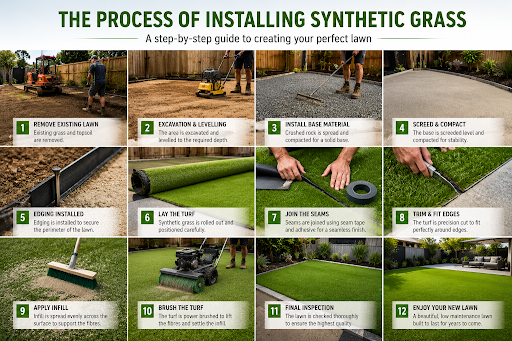
A beautifully installed synthetic lawn often looks effortless. The surface is smooth, lush, vibrant and perfectly level, creating the appearance of a professionally maintained lawn every day of the year. What many people do not see, however, is the extensive work that takes place beneath the surface before the first piece of synthetic turf is ever laid.
Professional synthetic grass installation is a carefully planned process that combines excavation, engineering, drainage, precision measurements and expert craftsmanship. Every stage contributes to creating a lawn that not only looks outstanding on the day it is installed but also continues to perform for many years afterwards.
Whether you are replacing a tired natural lawn, creating a pet-friendly backyard or designing a low-maintenance outdoor entertaining area, understanding the installation process helps explain why professional preparation is so important.
For Sunshine Coast homeowners, investing in quality synthetic turf means investing in an outdoor surface designed to withstand Queensland’s climate while providing year-round beauty.
Every Great Lawn Begins with Planning
Before machinery arrives or soil is removed, every installation begins with careful planning.
No two properties are exactly alike. Every site presents its own opportunities and challenges depending on the slope of the land, drainage conditions, existing landscaping and intended use of the finished lawn.
Professional installers assess several important factors before work begins, including:
- Existing ground conditions.
- Drainage requirements.
- Property access.
- Edging locations.
- Irrigation systems.
- Tree roots.
- Surrounding gardens.
- Retaining walls.
- Pool areas.
- Paving and pathways.
This assessment allows the installation team to determine the most suitable preparation methods for the property.
Taking time during the planning stage helps avoid unexpected issues later in the project and ensures the finished lawn integrates seamlessly with the surrounding landscape.
Removing the Existing Lawn
One of the biggest misconceptions surrounding artificial grass is that it can simply be rolled out over an existing natural lawn.
While this may seem like a quick solution, it almost always leads to problems over time.
Natural grass continues to decompose beneath the synthetic surface. As roots die and organic material breaks down, the ground can settle unevenly, creating bumps, hollows and unstable areas.
For this reason, the first major stage of installation is removing the existing lawn.
This usually involves excavating both the grass and a layer of topsoil to create a clean foundation for the new surface.
Removing vegetation also helps eliminate weeds and reduces the chance of future movement beneath the synthetic turf.
Excavation Creates a Stable Foundation
After the grass has been removed, excavation continues to achieve the required depth.
The amount of material removed depends on several factors, including:
- Soil type.
- Drainage conditions.
- Finished height requirements.
- Type of synthetic grass being installed.
- Intended use of the area.
Professional excavation creates a level platform that allows the remaining installation process to be completed accurately.
Although homeowners often focus on the appearance of the finished lawn, excavation is one of the most important stages in ensuring long-term performance.
Installing Quality Edging
Before the base materials are installed, suitable edging is often fitted around the perimeter.
Edging performs several important functions.
It helps define the shape of the lawn, provides secure fixing points for the synthetic grass and creates clean transitions between turf and surrounding landscaping features.
Depending on the project, edging may include:
- Aluminium.
- Steel.
- Timber.
- Concrete.
- Existing paving.
- Garden borders.
The edging must be installed accurately because it determines the lawn’s final shape and finish.
Well-installed edging contributes significantly to the professional appearance of the completed project.
Building the Base
The strength of any synthetic lawn comes from the foundation beneath it.
Once excavation has been completed, a carefully selected base material is installed.
This base usually consists of crushed rock or road base that is spread evenly across the prepared area.
The material is then compacted using specialised machinery.
Compaction is essential because it removes air pockets and creates a solid platform capable of supporting years of everyday use.
Without proper compaction, the surface may settle unevenly over time.
This stage often requires multiple passes with compacting equipment to achieve the desired stability.
Achieving the Perfect Level
Creating a perfectly level lawn is far more challenging than it appears.
Professional installers use screeding techniques to produce a smooth and even surface before the turf is installed.
At the same time, subtle gradients are maintained to encourage effective water runoff.
Although the lawn may appear completely flat, slight falls are often incorporated to improve drainage while remaining virtually invisible to the eye.
Precision during this stage helps ensure the finished synthetic lawn feels comfortable underfoot and maintains its appearance for many years.
Drainage Is Carefully Considered
Queensland weather can deliver heavy rainfall during storm season.
A quality synthetic grass installation must be able to cope with these conditions.
Drainage is incorporated into every stage of the installation process.
The prepared base allows water to move freely beneath the synthetic grass before dispersing naturally into the surrounding ground.
Professional preparation helps prevent:
- Standing water.
- Muddy patches.
- Soft spots.
- Water pooling.
- Uneven settlement.
Good drainage protects both the synthetic turf and the underlying foundation.
Laying the Synthetic Grass
Once the base has been fully prepared, the transformation begins.
Large rolls of synthetic grass are carefully positioned across the prepared area.
This stage requires careful planning because every section of turf contains fibres that naturally lean in one direction.
All pieces must face the same way to create a consistent appearance across the entire lawn.
Even slight differences in fibre direction can create visible colour changes when viewed from different angles.
Experienced installers carefully position every roll before making precise cuts around pathways, gardens, retaining walls and other landscape features.
Precision Cutting Around Obstacles
Very few lawns are simple rectangles.
Most residential properties include garden beds, trees, stepping stones, pool edges, patios or curved landscaping.
Each of these features requires careful trimming.
Professional installers use specialised cutting tools to shape the synthetic turf so it fits perfectly around every obstacle.
The goal is to create natural flowing edges that appear as though the lawn was always part of the landscape.
Accurate cutting is one of the details that separates a professional installation from an average one.
Joining the Sections Together
Larger lawns usually require multiple sections of synthetic grass.
These joins must be virtually invisible once installation has been completed.
Installers carefully align the edges before applying specialised joining tape and adhesive beneath the seams.
Each joint is pressed together with great precision to ensure the fibres blend naturally across the connection.
When completed correctly, most people cannot identify where one section finishes and the next begins.
The quality of these joins contributes greatly to the finished appearance of the lawn.
Securing the Turf
After all sections have been positioned and joined, the synthetic grass is permanently secured around the perimeter.
Depending on the edging system, this may involve specialised fixing pins or fasteners designed specifically for synthetic turf installations.
Securing the perimeter prevents movement while maintaining a neat finish around the entire lawn.
Every edge is checked carefully before moving to the final stages of installation.
Applying the Infill
One of the final stages of a professional synthetic grass installation is the application of infill.
Many homeowners are surprised to learn that synthetic turf is not simply laid and left as it is. Infill plays an important role in both the appearance and long term performance of the lawn.
The infill material is spread evenly across the entire surface before being brushed deep into the fibres.
This process helps:
- Support the grass blades.
- Improve stability.
- Protect the backing.
- Assist drainage.
- Increase durability.
- Create a more natural feel underfoot.
The type and amount of infill used will depend on the specific turf product and its intended application. A family backyard may require a different infill system than a sports field or commercial installation.
Applying the correct infill is another reason why professional installation delivers better long-term results.
Brushing the Turf to Create a Natural Finish
After the infill has been applied, the entire lawn is power-brushed.
This stage lifts the synthetic fibres into an upright position, creating the lush appearance that people associate with a healthy, natural lawn.
Brushing also helps distribute the infill evenly throughout the surface while blending the fibres.
As the fibres stand upright, the lawn immediately takes on a fuller, more realistic appearance.
This finishing process transforms the installation from a flat surface into a vibrant lawn that closely resembles freshly maintained natural grass.
Final Inspection and Quality Control
Before the installation is considered complete, experienced installers carry out a thorough inspection of the finished project.
Every aspect of the lawn is checked, including:
- Surface levels.
- Drainage.
- Joins.
- Edges.
- Fibre direction.
- Overall presentation.
- Stability.
- Cleanliness of the surrounding area.
Small adjustments are made where necessary to ensure every section of the lawn meets professional standards.
This attention to detail ensures homeowners receive a finished product that looks outstanding from every angle.
Why Professional Installation Matters
Installing synthetic grass involves far more than laying artificial turf across the ground.
Each stage builds upon the previous one, and mistakes made early in the process can affect the appearance and lifespan of the entire lawn.
Professional installers bring experience, specialised equipment and technical knowledge that cannot easily be replicated with a simple do-it-yourself approach.
Experienced installation teams understand:
- Correct excavation depths.
- Soil behaviour.
- Drainage design.
- Base preparation.
- Seam placement.
- Product handling.
- Fibre direction.
- Expansion allowances.
These details may seem small individually, but together they determine how well the lawn performs over the next ten to fifteen years.
Installation for Different Types of Properties
Although the installation principles remain largely the same, every project is tailored to suit the property.
Residential Homes
Family homes often prioritise appearance, comfort and durability.
Backyards need to withstand children playing, pets running across the lawn and frequent entertaining while maintaining a soft, attractive surface.
Pool Areas
Around swimming pools, installers pay particular attention to drainage, edging and seamless integration with surrounding paving.
The result is a clean, low-maintenance area that remains attractive throughout the year.
Commercial Properties
Businesses often require durable landscaping capable of handling regular pedestrian traffic while maintaining a professional appearance.
Synthetic turf provides an excellent solution for office complexes, childcare centres, accommodation facilities and retail spaces.
Schools and Recreational Areas
Educational facilities and community spaces require surfaces that are both durable and safe.
Professional installation ensures these high-use environments receive a stable foundation capable of handling constant activity.
Weather Conditions on the Sunshine Coast
Queensland’s climate presents unique challenges for outdoor landscaping.
Periods of intense sunshine are often followed by heavy rainfall, creating conditions that place significant stress on natural lawns.
Professional synthetic grass installation considers these environmental conditions from the very beginning.
Proper drainage, suitable base materials and quality installation techniques help ensure the finished lawn performs well throughout changing seasons.
This preparation allows synthetic turf to remain usable after heavy rain while maintaining its attractive appearance during the hot summer months.
Caring for Your New Lawn
One of the biggest advantages of synthetic grass is the reduction in ongoing maintenance.
Unlike natural lawns, artificial grass does not require mowing, fertilising or regular watering.
However, a small amount of routine care helps keep the surface looking its best.
Simple maintenance includes:
- Removing leaves and debris.
- Occasionally, brush high-traffic areas.
- Rinse the surface when required.
- Keeping the surrounding garden beds tidy.
These simple tasks help maintain the appearance of the lawn while extending its lifespan.
A Long-Term Investment
Many homeowners initially compare synthetic grass with the cost of installing natural turf.
While this comparison is understandable, it is equally important to consider the long term costs of maintaining a natural lawn.
Over the years, mowing equipment, fuel, fertilisers, weed control, irrigation, water usage and lawn repairs all contribute to ongoing expenses.
Professionally installed synthetic turf reduces many of these maintenance requirements while continuing to provide a neat, green lawn throughout the year.
For many Sunshine Coast property owners, this combination of convenience and durability makes synthetic grass an attractive long-term investment.
Choosing the Right Installation Team
Even the highest quality artificial grass can underperform if it is not installed correctly.
Choosing experienced professionals ensures every stage of the project receives the attention it deserves, from initial excavation through to the final brush of the fibres.
Quality installation focuses not only on creating an attractive lawn today but also on ensuring it continues performing well for many years into the future.
A properly installed synthetic lawn should remain level, drain efficiently, withstand everyday use and maintain its natural appearance season after season.
The Foundation of a Beautiful Lawn
The success of any synthetic grass project begins long before the turf is unrolled.
Every stage of the installation process, from planning and excavation through to base preparation, drainage, joining, infill application and final brushing, contributes to the finished result.
While homeowners often notice the beautiful green surface first, the true quality of a synthetic lawn lies beneath their feet. A properly prepared foundation provides the stability, drainage and durability needed to support years of outdoor living.
Whether you are transforming a family backyard, upgrading a commercial landscape or creating a beautiful poolside retreat, professional installation ensures your synthetic turf performs exactly as it was designed to.
By investing in quality workmanship from the very beginning, Sunshine Coast property owners can enjoy a realistic, low-maintenance lawn that enhances their outdoor lifestyle for many years to come.
For expert advice and professional synthetic grass installation across the Sunshine Coast, visit Coastal Synthetic Turf: